



Bcl-W
BCL-W, an anti-apoptotic member of the BCL-2 family, promotes cell survival by inhibiting mitochondrial-mediated apoptosis[1][2][3]. Structurally, BCL-W contains eight α-helices, with a C-terminal α8 helix that modulates interactions with BH3-only pro-apoptotic proteins, distinguishing it from BCL-2 and BCL-xL[1][4]. Mechanistically, BCL-W regulates cell fate by integrating signals from PI3K/Akt and β-catenin pathways, enhancing invasion, mesenchymal transitions, and survival in cancer models including gastric cancer and glioblastoma[5][6][3]. In disease contexts, BCL-W supports B-cell lymphoma cell survival, affects antiestrogen responsiveness in breast cancer, and protects neurons in epilepsy and Alzheimer’s disease models[2][7][8][9][3]. Compared with related isoforms, BCL-W shows tissue-specific functions, such as essential roles in spermatogenesis and axonal maintenance in sensory neurons, whereas it is dispensable for survival in other cell types[10][11][12][3]. Pharmacologic and genetic studies indicate that BCL-W modulates sensitivity to BH3-mimetics and microtubule inhibitors, influencing apoptosis thresholds in cancer cells[13][14][3]. Despite its structural similarity to BCL-2 and BCL-xL, the unique C-terminal helix and transcriptional regulation by microRNAs, including miR-122, confer distinct regulatory features and therapeutic relevance[1][15][3]. Current research explores dual BCL-W/BCL-xL degraders and selective inhibitors as potential anti-cancer strategies[16][3].
References:
- [1]. Denisov AY, et al. Solution structure of human BCL-w: modulation of ligand binding by the C-terminal helix. J Biol Chem. 2003 Jun 6;278(23):21124-8. [Content Brief]
- [2]. Crawford AC, et al. Co-inhibition of BCL-W and BCL2 restores antiestrogen sensitivity through BECN1 and promotes an autophagy-associated necrosis. PLoS One. 2010 Jan 6;5(1):e8604. [Content Brief]
- [3]. Bae IH, et al. Bcl-w promotes gastric cancer cell invasion by inducing matrix metalloproteinase-2 expression via phosphoinositide 3-kinase, Akt, and Sp1. Cancer Res. 2006 May 15;66(10):4991-5. [Content Brief]
- [4]. Murphy B, et al. Bcl-w protects hippocampus during experimental status epilepticus. Am J Pathol. 2007;171(4):1258-1268. [Content Brief]
- [5]. Yan W, et al. Overexpression of Bcl-W in the testis disrupts spermatogenesis: revelation of a role of BCL-W in male germ cell cycle control. Mol Endocrinol. 2003 Sep;17(9):1868-79. [Content Brief]
- [6]. Poddar SK, et al. Discovery of dual BCL-xL/BCL-w degraders by exploiting the bis(sulfonyl)benzene ring of ABT-263 as a linkage vector. J Med Chem. 2025;68(17):18684-18702. [Content Brief]
- [7]. Adams CM, et al. BCL-W has a fundamental role in B cell survival and lymphomagenesis. J Clin Invest. 2017 Feb 1;127(2):635-650. [Content Brief]
- [8]. Lee WS, et al. Bcl-w Enhances Mesenchymal Changes and Invasiveness of Glioblastoma Cells by Inducing Nuclear Accumulation of β-Catenin. PLoS One. 2013 Jun 27;8(6):e68030. [Content Brief]
- [9]. Courchesne SL, et al. Sensory neuropathy attributable to loss of Bcl-w. J Neurosci. 2011 Feb 2;31(5):1624-34. [Content Brief]
- [10]. Dove AW. A prolific nucleator program. J Cell Biol. 2003;162(5):i3.
- [11]. Zhu X, et al. Neuroprotective properties of Bcl-w in Alzheimer disease. J Neurochem. 2004 Jun;89(5):1233-40. [Content Brief]
- [12]. Lin CJ, et al. miR-122 targets an anti-apoptotic gene, Bcl-w, in human hepatocellular carcinoma cell lines. Biochem Biophys Res Commun. 2008;375(3):315-320.
- [13]. Huang S, et al. BCL-W is a regulator of microtubule inhibitor-induced mitotic cell death. Oncotarget. 2016 Jun 21;7(25):38718-38730. [Content Brief]
- [14]. O'Reilly LA, et al. Tissue expression and subcellular localization of the pro-survival molecule Bcl-w. Cell Death Differ. 2001 May;8(5):486-94. [Content Brief]
- [15]. Hartman ML, et al. BCL-w: apoptotic and non-apoptotic role in health and disease. Cell Death Dis. 2020 Apr 21;11(4):260. [Content Brief]
- [16]. Rooswinkel RW, et al. Bcl-2 is a better ABT-737 target than Bcl-xL or Bcl-w and only Noxa overcomes resistance mediated by Mcl-1, Bfl-1, or Bcl-B. Cell Death Dis. 2012 Aug 9;3(8):e366. [Content Brief]
-
Bcl-W Related Products (17)
Related Products (17)

- 1
-
Venetoclax
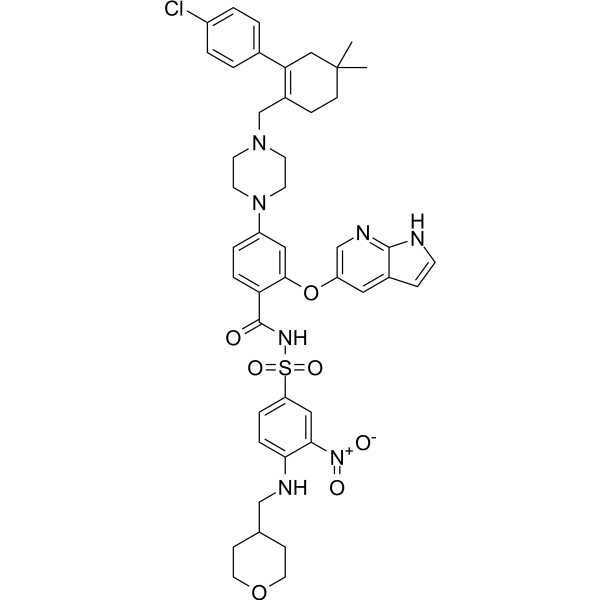 0 ImagesSynonyms: ABT-199; GDC-0199; RG7601
-
Navitoclax
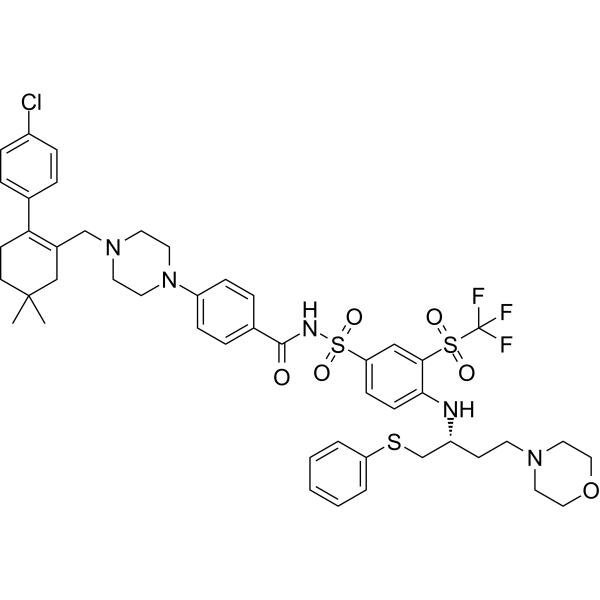 0 ImagesSynonyms: ABT-263Navitoclax (ABT-263) is a potent and orally active Bcl-2 family protein inhibitor that binds to multiple anti-apoptotic Bcl-2 family proteins, such as Bcl-xL, Bcl-2 and Bcl-w, with a Ki of less than 1 nM.
-
ABT-737
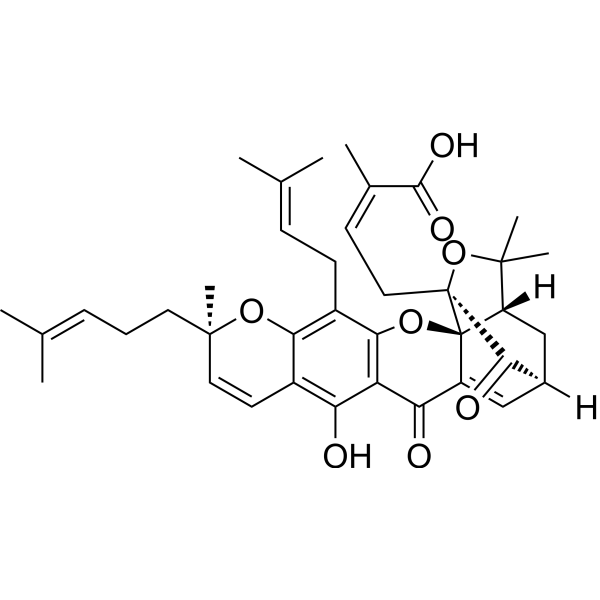
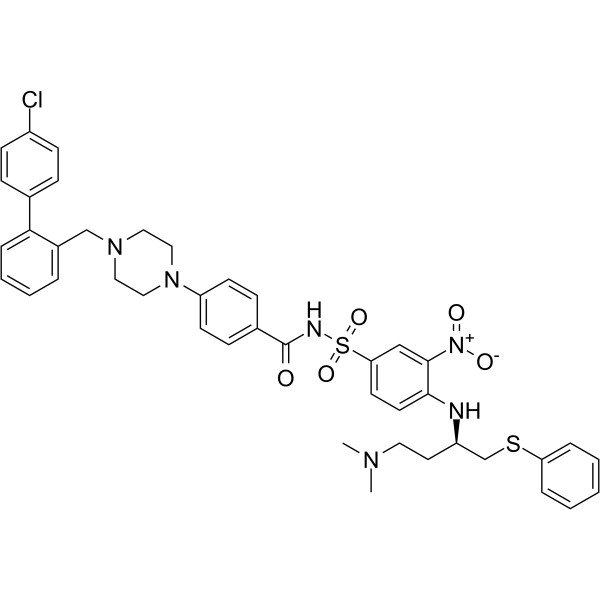 0 ImagesABT-737, a BH3 mimetic, is a potent Bcl-2, Bcl-xL and Bcl-w inhibitor with EC50s of 30.3 nM, 78.7 nM, and 197.8 nM, respectively. ABT-737 induces the disruption of the BCL-2/BAX complex and BAK-dependent but BIM-independent activation of the intrinsic apoptotic pathway. ABT-737 induces autophagy and has the potential for acute myeloid leukemia (AML) research.
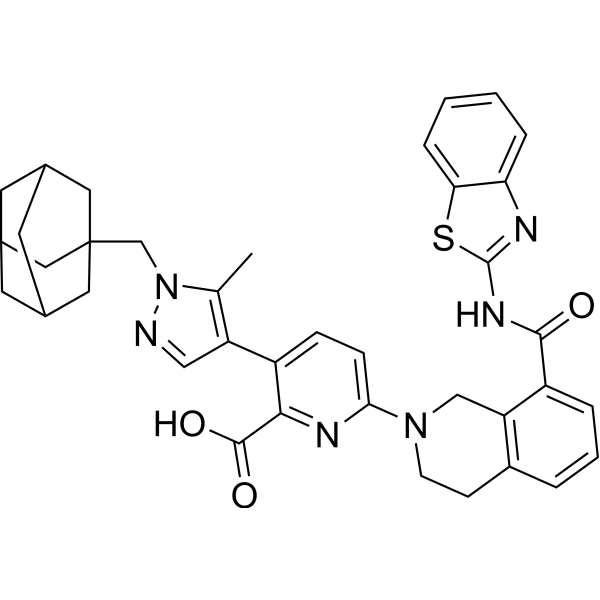
-
Navitoclax dihydrochloride
 0 ImagesSynonyms: ABT-263 dihydrochlorideNavitoclax dihydrochloride (ABT-263 dihydrochloride) is an orally active BH3 mimetic and an inhibitor of Bcl-2, Bcl-xL, and Bcl-w, with a Ki value of <1 nM for each target. Navitoclax dihydrochloride triggers endogenous Apoptosis and downregulates the expression of Survivin and TGFβ2. Navitoclax dihydrochloride alleviates fibrosis and induces thrombocytopenia. Navitoclax dihydrochloride exhibits anticancer activity against a variety of tumors and enhances the efficacy of chemotherapy and radiotherapy. Navitoclax dihydrochloride can be used in the research of acute lymphoblastic leukemia, ovarian cancer, and fibrotic diseases.

-
PZ15227
 0 ImagesCat. No.: HY-152179CAS No.: 2143464-25-7PZ15227 is a potent and selective Bcl-XL PROTAC degrader with a DC50 of 46 nM, and its Ki values for Bcl-XL, Bcl-2 and Bcl-w are 1.90 nM, 3.52 nM and >1 mM, respectively. PZ15227 recruits Bcl-XL to CRBN, induces polyubiquitination of Bcl-XL and promotes its proteasome-dependent degradation, thereby selectively killing senescent cells that rely on Bcl-XL for survival without causing severe thrombocytopenia. PZ15227 can be used for research related to age-related diseases, aging and renal cancer.
-
Obatoclax Mesylate
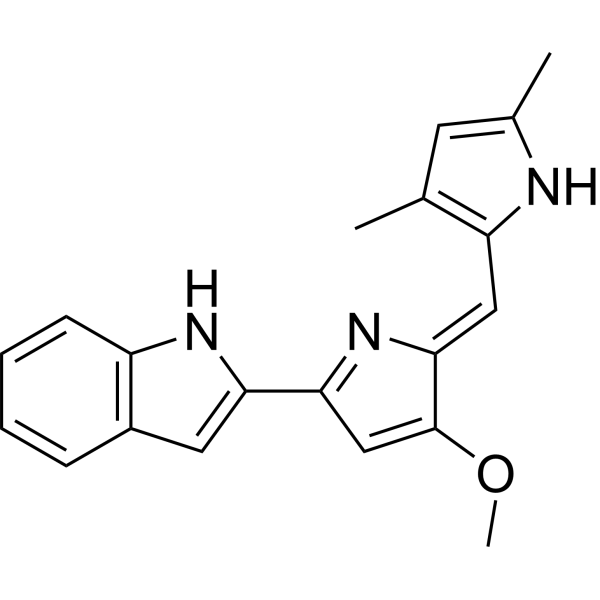
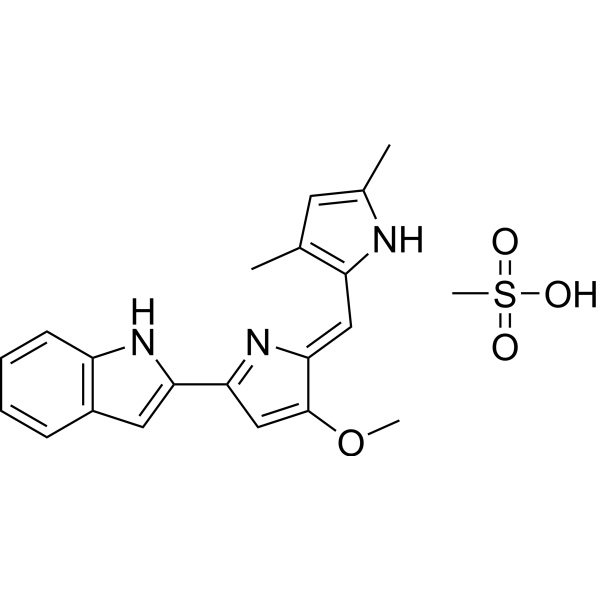 0 ImagesSynonyms: GX15-070 MesylateObatoclax Mesylate (GX15-070 Mesylate), a BH3 mimetic, is a pan-BCL-2 family proteins inhibitor with a Ki of 220 nM for BCL-2. Obatoclax Mesylate induces autophagy-dependent cell death and targets cyclin D1 for proteasomal degradation. Obatoclax Mesylate has anti-cancer and broad-spectrum antiparasitic activity.
-
Navitoclax (Standard)
 0 ImagesSynonyms: ABT-263 (Standard)Navitoclax (Standard) (ABT-263 (Standard)) is the analytical standard of Navitoclax (HY-10087). This product is intended for research and analytical applications. Navitoclax (ABT-263 ) is an orally active BH3 mimetic and an inhibitor of Bcl-2, Bcl-xL, and Bcl-w, with a Ki value of <1 nM for each target. Navitoclax triggers endogenous Apoptosis and downregulates the expression of Survivin and TGFβ2. Navitoclax alleviates fibrosis and induces thrombocytopenia. Navitoclax exhibits anticancer activity against a variety of tumors and enhances the efficacy of chemotherapy and radiotherapy. Navitoclax can be used in the research of acute lymphoblastic leukemia, ovarian cancer, and fibrotic diseases.
-
Mcl-1 inhibitor 6
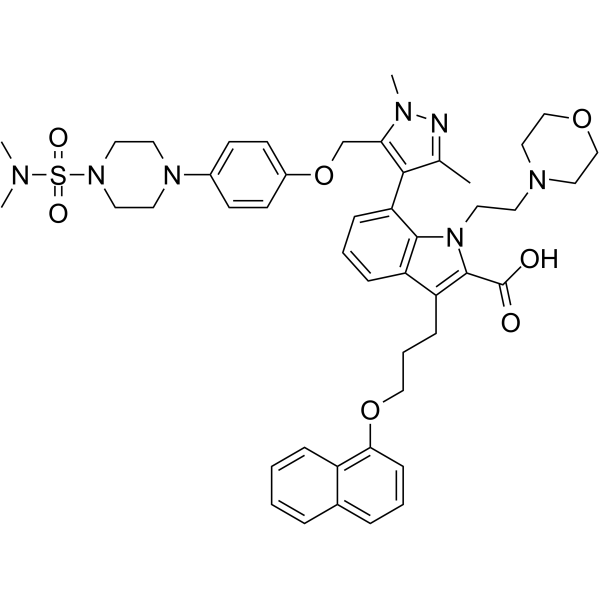
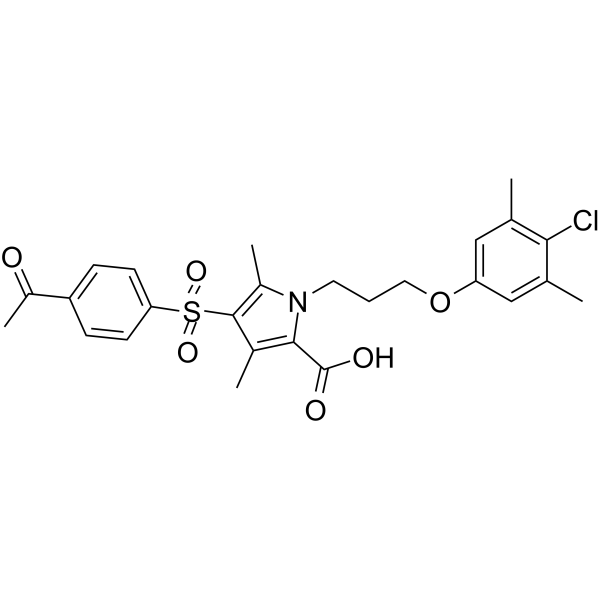 0 ImagesMcl-1 inhibitor 6 is an orally active, selective myeloid cell leukemia 1 (Mcl-1) protein inhibitor with a Kd of 0.23 nM and a Ki of 0.02 μM. Mcl-1 inhibitor 6 possesses superior selectivity over other Bcl-2 family members (Bcl-2, Bcl2A1, Bcl-xL, and Bcl-w, Kd>10 μM). Mcl-1 inhibitor 6 is a potent antitumor agent.

-
Navitoclax-d8
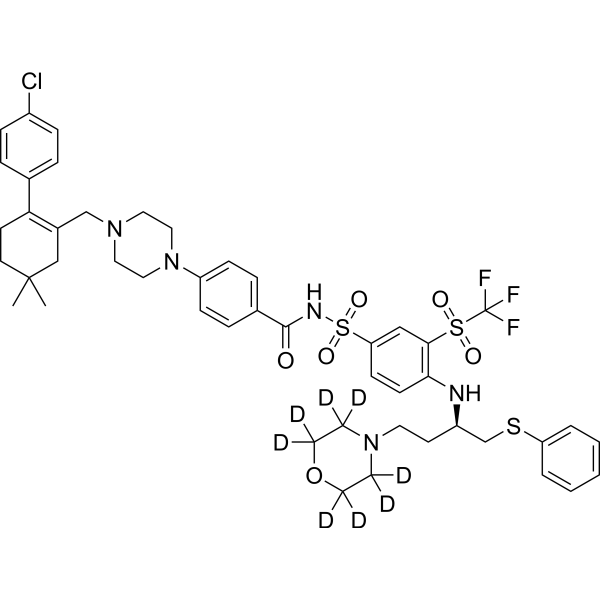 0 ImagesNavitoclax-d8 is the d8-labeled Navitoclax (HY-10087). Navitoclax (ABT-263 ) is an orally active BH3 mimetic and an inhibitor of Bcl-2, Bcl-xL, and Bcl-w, with a Ki value of <1 nM for each target. Navitoclax triggers endogenous Apoptosis and downregulates the expression of Survivin and TGFβ2. Navitoclax alleviates fibrosis and induces thrombocytopenia. Navitoclax exhibits anticancer activity against a variety of tumors and enhances the efficacy of chemotherapy and radiotherapy. Navitoclax can be used in the research of acute lymphoblastic leukemia, ovarian cancer, and fibrotic diseases.
-
A-371191
 0 ImagesCat. No.: HY-122275CAS No.: 406228-58-8A-371191 is a selective Bcl-XL antagonist with a Ki <0.5 μM, and also acts as a mitochondria-targeting agent and chemosensitizer. A-371191 restores the sensitivity of cancer cells overexpressing Bcl-XL to Cisplatin (HY-17394) and Doxorubicin (HY-15142A). A-371191 reduces tumor volume in mice with intraperitoneal tumors. A-371191 can be used in the research of acute myeloid leukemia.
- 1



